

By Alexa Mostrom, Fox23 News
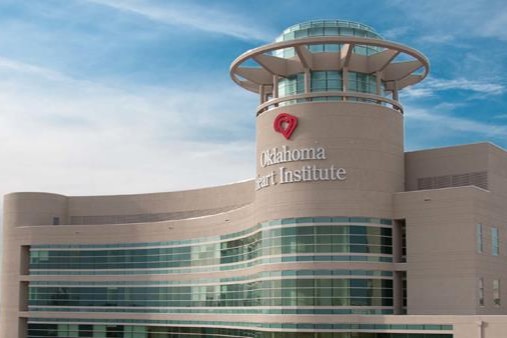
TULSA, Okla. — A new procedure at the Oklahoma Heart Institute is changing lives for people at high risk for heart surgery.
“That’s why it’s so ground breaking and important. This is the first such device that’s a non surgical way to replace the mitral valve,” said Dr. Kamran Muhammad.
Dr. Muhammad with the Oklahoma Heart Institute worked on the clinical trail for this Trans Catheter Mitral Valve Replacement for the past five years. In December, it got FDA approved.
“It’s all done through the blood vessels. We insert the new valve, which can get miniaturized. It’s inserted through the vein in the groin, the femoral vein, and directed to the heart under ultrasound and x-ray guidance and then we implant it, deploy it,” said Dr. Muhammad.
This procedure specifically helps people at high risk of heart surgery.
Before, if they needed the mitral valve replace, they would have to do some form of heart surgery and for high risk patients, this could be very dangerous.
“For lots of reasons, patients just weren’t getting treated. Either they don’t want it or the doctor, surgeon or referring doctor realizes ‘yeah, you got a bad valve, you’re suffering but the fix might be worse than what you’re going through now’,” said Dr. Muhammad.
Heart surgery can take months to recover from, but with this procedure, it only takes up to a few weeks.
“Most patients stay in the hospital one or two nights and go home after that,” said Dr. Muhammad.
Jerry Kline was the first patient at Oklahoma Heart Institute to get the Mitral Valve Replacement after it was FDA Approved. He says he wasn’t nervous about it at all.
“Not with Dr. Muhammad and his team of experts. They made it very easy, they explained everything prior to, during and after. It was remarkable really,” said Kline.
Kline is in his 80s and has had heart surgery before, so he was a higher risk patient. He says the recovery from this procedure was quicker.
“I was in the hospital overnight, pretty much the next full day for them to do some testing and monitoring, do an echocardiogram to make sure the new heart pump was working properly, then went home and just a few slow days, a natural thing with the anesthesia you get but it wears off as time goes on,” said Kline.
Kline says his heart failure symptoms like shortness of breath and fatigue are improving. He encourages anyone who is curious to talk to the Oklahoma Heart Institute.
If you want to learn more about Trans Catheter Mitral Valve Replacement, or other trials at the Oklahoma Heart Institute, click here.